TOOLS & EXPERIENCES
Building My Own Digital Ecosystem: From Portfolio to Independent Tech Blog
How I built The Archive, The Tech Palace and Cyyverse: three connected spaces for my work, writing and digital presence.
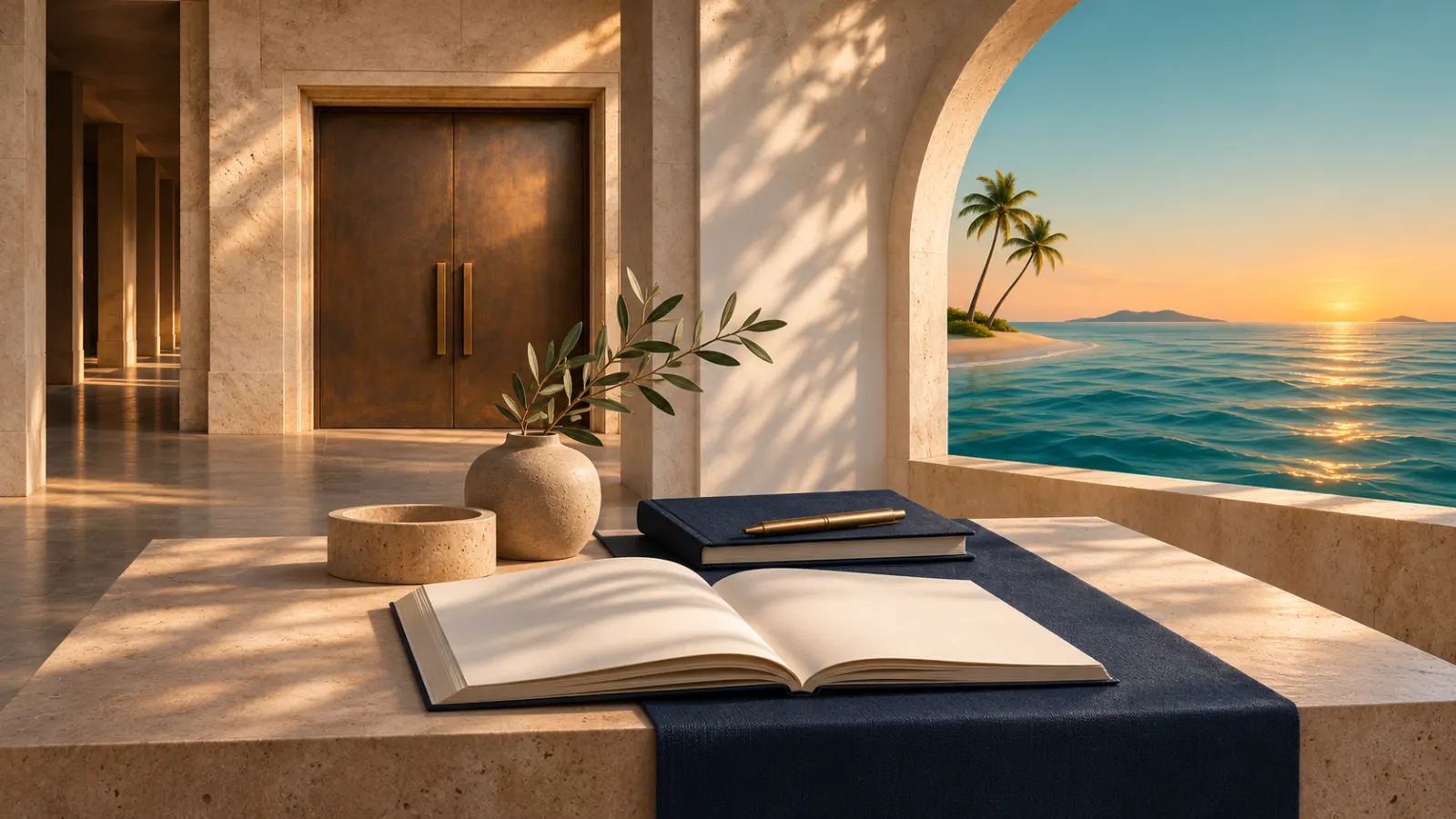
From portfolio to independent tech blog: why I built three separate spaces, and what creating them taught me.
For a long time, my work was scattered. My professional experience was on LinkedIn, my code on GitHub, my articles on Hashnode, and some projects could only be discovered if you had the right link. Each place served a purpose, but none offered the full picture.
I wanted one space to show what I build, another to develop my ideas, and a simple entry point to both. That is how The Archive, The Tech Palace, and Cyyverse took shape.
These are not three versions of the same page. Each answers a different question: What have I built?, What have I learned?, and Where can you find me?
Three roles, one identity
I could have put everything on a single website. That might have been easier to explain, but harder to navigate. Someone examining a project does not necessarily want to read a long article; someone looking for a tutorial should not have to walk through a portfolio first.
So I gave each space a clear purpose. The Archive tells the story of my journey and presents my work. The Tech Palace is home to articles and deeper reflections. Cyyverse connects the platforms and my points of contact. All three share an identity without imposing the same browsing experience.
This separation also shaped the technical work: each site could take the form and use the tools best suited to its purpose. The connections between them remain visible, allowing visitors to move freely from discovery to reading and then to getting in touch.
The Archive: presenting a journey as a visit
A portfolio can quickly become a series of project cards. For The Archive, I chose the museum as a guiding idea: projects become works to examine, skills have their own laboratory, and my journey has a room of its own.
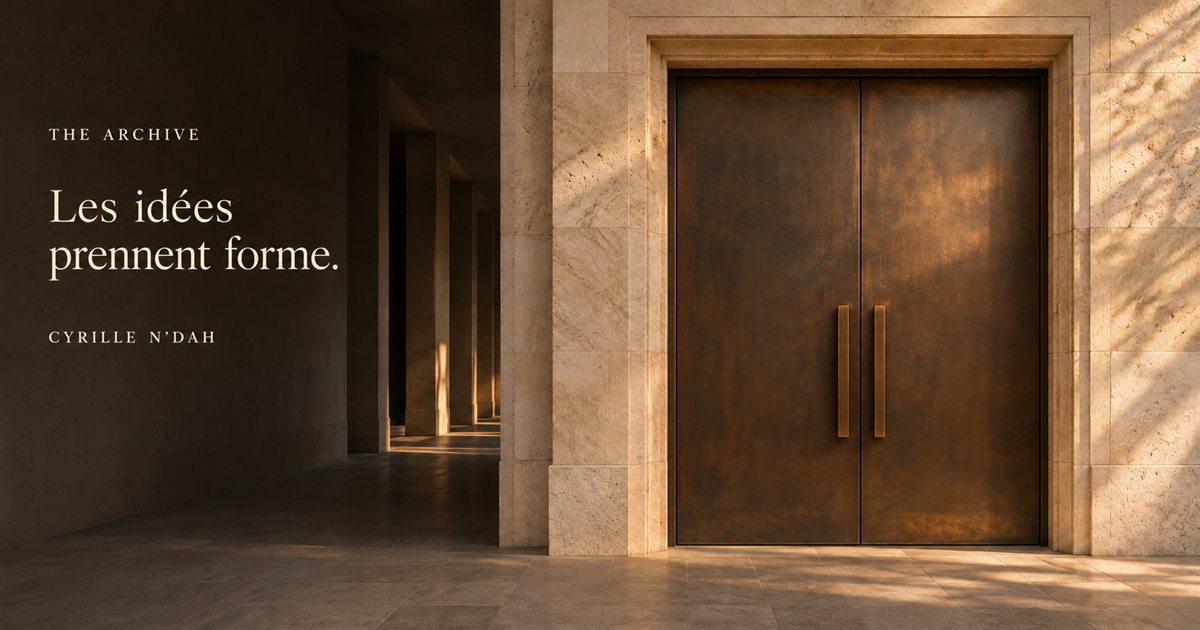
The Archive: an entrance that introduces the portfolio’s museum experience.
Immersion should never prevent access to information. Visitors can follow a guided tour, explore freely, or open the content directly. That last option matters especially on a phone, when someone wants to understand a project quickly without navigating a three-dimensional scene.
The detailed pages explain the need behind each project, what was built, and the relevant technologies. I also learned to be selective with detail: explaining a product does not mean revealing every internal decision, particularly when the work was done for a client.
Technically, the immersive part of the site uses React, Vinext, and Three.js. More conventional content remains accessible as pages. The most interesting challenge was not adding 3D, but making it coexist with clear writing, practical mobile navigation, and shareable links.
The Tech Palace: giving ideas a lasting home
I had already published articles elsewhere, particularly on Hashnode and daily.dev. These platforms are useful for reaching readers, but I also wanted a place where I could shape the editorial experience myself: layout, categories, translations, previews before publication, and connections between topics.
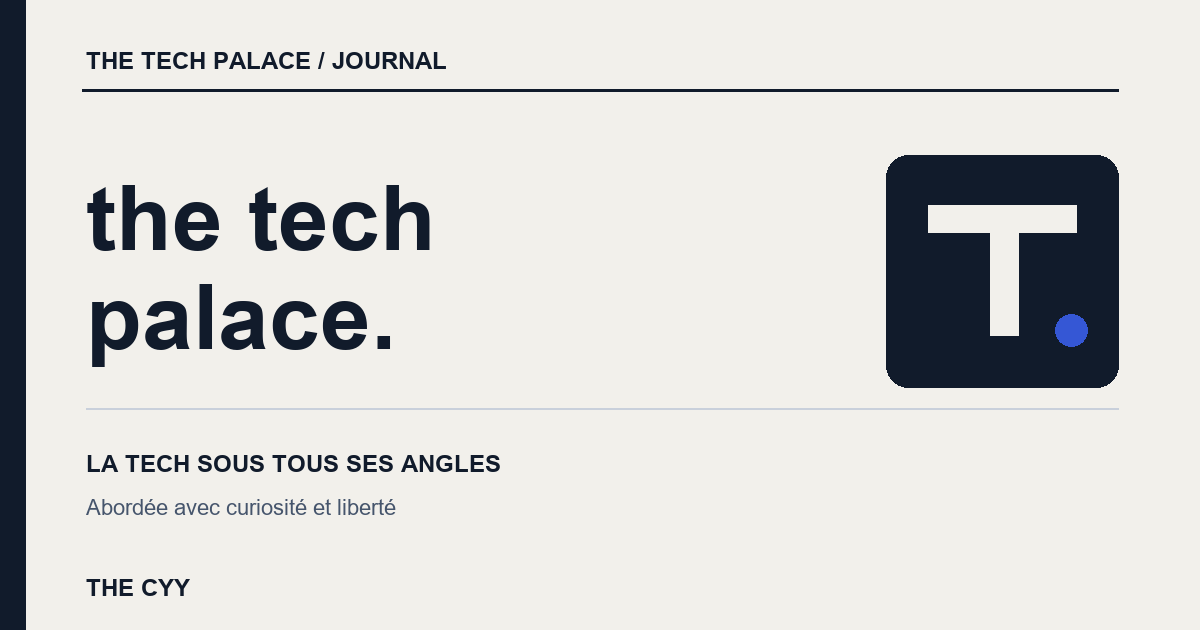
The Tech Palace: a technology journal designed as a reading space in its own right.
The Tech Palace is built with Astro. Articles are available in French and English; my studio lets me prepare drafts, check how they render, and manage publications. A newsletter completes the experience for readers who want to receive new editions.
The site and its editorial features also rely on Cloudflare, particularly Workers and D1. Building an independent blog does not mean leaving external communities behind: an article can be shared elsewhere while the journal remains its reference address.
This project reminded me that a publishing tool is more than a “Publish” button. You need to be able to reread, revise, translate, illustrate, find, and maintain a piece of writing over time.
Cyyverse: an entry point with a personality of its own
A link hub could have been a vertical list of buttons. Instead, I wanted Cyyverse to feel like a stop between sky and sea. It brings together the portfolio, the blog, and my other online spaces in an environment visitors can also explore.

Cyyverse: an entry point to my other spaces, rather than just a list of links.
The site uses Next.js, React, and Three.js. Its scene changes with the atmosphere of day and night, while keeping the destinations recognizable. Here too, the visual experience only serves its purpose if the main action remains obvious: find a link and open it.
Building this third space pushed me to work on details that seem minor until they get in someone’s way: touch target size, mobile scrolling, readability at different browser zoom levels, and the placement of controls on a small screen.
What connecting three sites really involves
The ecosystem works because each platform has a clear responsibility, but also because they recognize one another. Links are consistent, domain names follow the same logic, and every page can be shared on its own.
The current structure is simple:
| Address | Purpose |
|---|---|
| cyrille-ndah.com | Explore my journey and work |
| blog.cyrille-ndah.com | Read articles and follow the journal |
| links.cyrille-ndah.com | Find my platforms and contact points |
I had to think beyond the homepage: browser titles, search descriptions, social media previews, favicons, legal pages, and links between the sites. A carefully designed interface loses much of its value if sharing it shows the wrong image, a route cannot be found, or someone on a phone cannot reach the content.
The three projects do not have exactly the same architecture. That is intentional: an article journal and an interactive museum face different constraints. Their coherence comes from the experience they offer visitors, not from an identical technology stack.
The decisions that mattered most
The first was to keep more than one path to the content. Immersive exploration gives the portfolio and the hub their character, but direct access lets someone examine a project or open a link without a detour. One should not cancel out the other.
The second was to avoid confusing richness with accumulation. An animation, a room, a theme, or an interaction should help people understand or find their way. When an element takes up too much space, especially on a phone, it needs to move, shrink, or disappear.
The third was to treat publication as ongoing work. A site does not stop evolving when it is deployed. Feedback from people using other devices, screen sizes, or browser zoom settings reveals problems I might never see on my own computer.
Finally, I had to accept that the same decision does not work everywhere. The museum can invite visitors to take their time; a contact form should get straight to the point. The blog can support long-form reading; the hub should make its destinations immediately clear.
What comes next?
These three sites give me a foundation for sharing more of what I build and learn. I will write separately about the design of The Archive, the editorial studio behind The Tech Palace, the creation of Cyyverse, and the technical decisions involved in each.
This first article sets the scene: my digital universe is not a static showcase. It is a collection of spaces that I will continue to write, improve, and connect.
If you have explored any of them, I would welcome your feedback. It helps me see what the work actually communicates beyond what I had imagined while building it.